Showing posts with label the sixties. Show all posts

Saturday, August 16, 2014

Anniversary: Woodstock, Looking Back Again And For a Reason This Time

mintu | 9:15 AM | | | | | | Be the first to comment!
It is, yet again, August 16th and time to remember back to Woodstock.

Why?  Why so much nostalgia for a concert I never attended (I was born 1970, nine months later... and no, my parents were in Spain at the moment...)?

Because, as a student of history, the moment appeals to me.

Coming at the end of a turbulent decade - the 60s - the concert was a royal f-ck-up, a disorganized mess, the promoters just a bit overwhelmed by the scale of their initial attempt and ill-prepared for the turnout that showed up (eventually 400,000 to 500,000 people, practically a major city).  They didn't have enough food or water, not enough security, poorly planned parking and traffic (it is not exaggeration to say that the concert shut down the southern half of New York state traffic).

It didn't help the surrounding communities either to have 500,000 show up unexpected on their doorsteps.  Bethel NY in particular bore a huge brunt of the problems, primarily helping out with keeping hundreds of thousands of concert-goers fed.  God bless 'em though, the people who lived there helped:

And that's kinda why I think fondly of Woodstock: people were for the most part good.  Good to each other.  Sure, there may have been a handful of people overpricing stuff or ripping others off, but those seem so few and far between and I can't find a lot of evidence about that.

There were only two deaths out of 500,000 people: one a heroin overdose and the other an accident involving a runaway tractor.  Almost no major fights, at least nothing reported to the local hospitals.  And most of what the hospitals handled were broken bones and medical emergencies.

And the key thing, about it being the Sixties: the concert-goers and the local police got along.  We're talking about the turbulent protest era, over civil rights and against the Vietnam War, where nearly every major march ended up with cops in riot gear launching tear gas and swinging batons at the dirty hippies.  The majority of the concert-goers were young and anti-war protesters.  There was a lot of drug use: a good amount of pot, and remember watch out for that "brown acid".  Any one of these things could have set the cops into Riot Control mode on top of the fact they had 500,000 people stumbling about Max Yasgur's farm.

The local police, however, tried something I'm surprised most police forces don't even apply 40 years later: a Soft Power approach of keeping the peace, where they didn't line up to intimidate the crowds with snipers and guys in body armor, but allowed the hired security people - most of them off-duty or ex-cops already - to patrol and handle the crowds.  The decision came down to avoid going after the drug users: the reality that a lot of attendees were gonna get high made detaining any of them a logistical nightmare.

Somewhere and somewhen, the local police tried treating the concert-goers not as rioters but as people.  And the results worked:
"...Not withstanding their personality, their dress and their ideas, they were and they are the most courteous, considerate and well-behaved group of kids I have ever been in contact with in my 24 years of police work," Lou Yank, the chief of police in nearby Monticello, told The New York Times...

Treating each other with respect tends to be a two-way deal.  And it made the Woodstock Festival work well enough that 45 years later everyone involved in it can look back with some small pride of being part of one of the biggest non-violent events in world history.

Sad to say, compared to the problems we've got whenever a protest or gathering forms anymore:

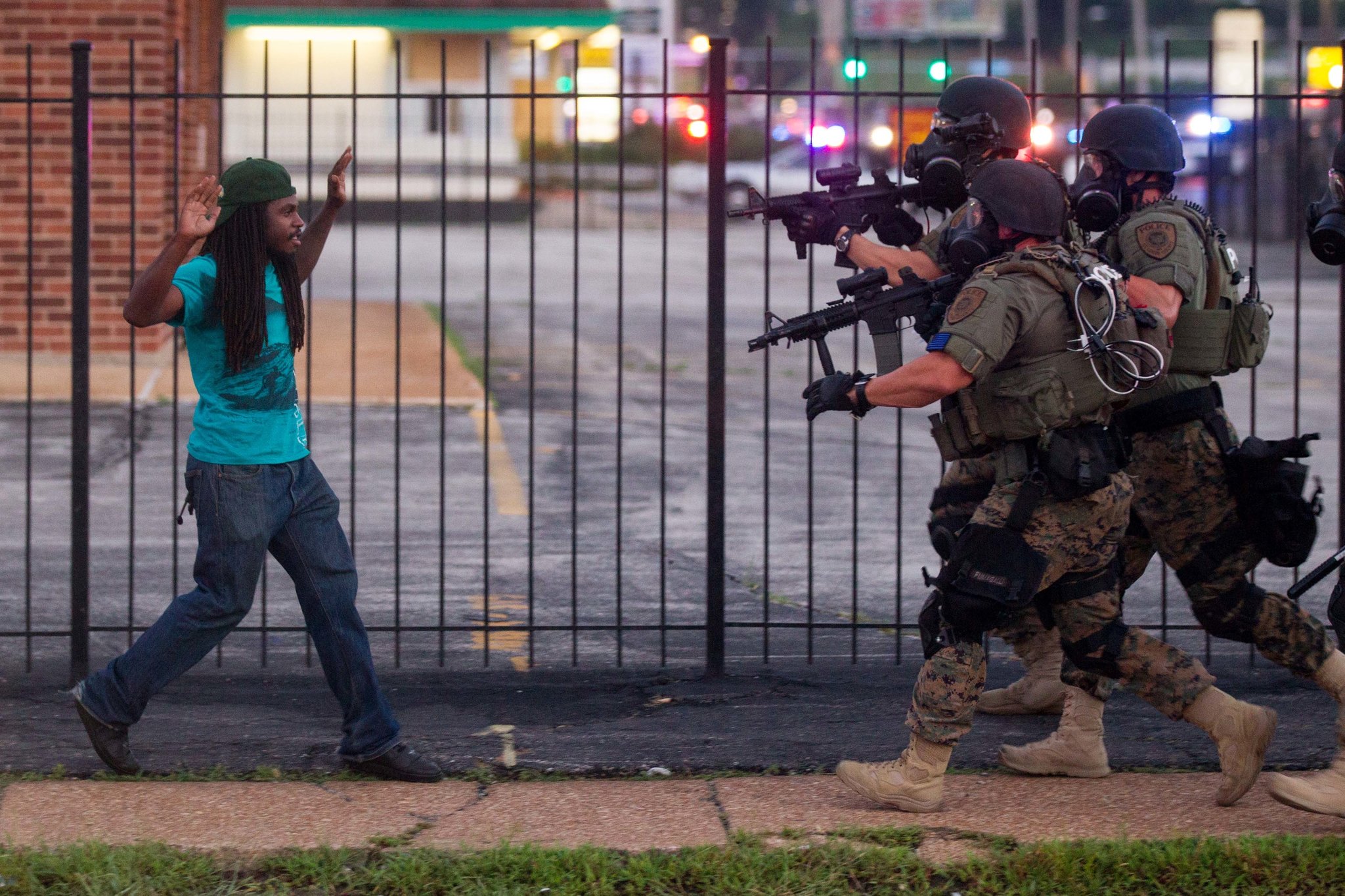
These are pictures from the first few days of protests in Ferguson Missouri after an incident where a cop shot an unarmed black teen in the back under questionable circumstances.  The local city and county police decided to bring in riot gear, body armor, snipers, and more personal firepower than most of our armed forces didn't deploy with during their tours of Iraq and Afghanistan (the quote sticking with me from an article from Business Insider: "We rolled lighter than this in an actual war zone").  And the county and city cops used rules of engagement that pretty much ensured rubber bullets and tear gas went flying everywhere, especially by Wednesday night.

It got bad enough that the state Governor forced the Ferguson PD and county law enforcement to stand down, sending in the state highway troopers to keep the peace.  And they went in like this:


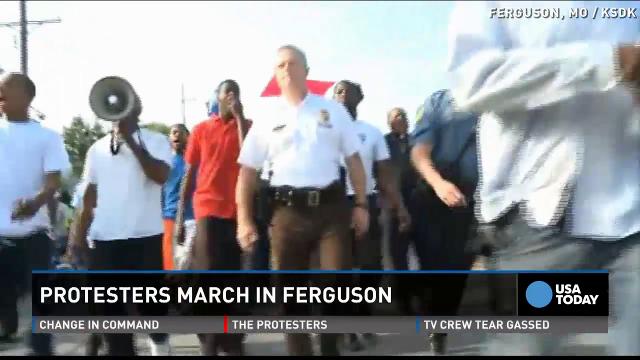
The state troopers went in talking, not shooting.  Walking with the protesters.  Mingling.  Hugging.

Wednesday night had violence.  Thursday night had hugs.  Notice a difference...

This is why we gotta remember Woodstock.  Everybody - the police, the civilians, the neighborhoods, everybody - went in on their best behavior, and everything worked out for the best.  Lessons that need to be learned.

Read more ...

Thursday, November 21, 2013

Anniversary of the Ultimate American Guessing Game

mintu | 7:46 PM | | | | | | Be the first to comment!
ADDED BELOW
I'm of the belief that you need to ask an American just three questions to ever figure out exactly who that person is: ask about the American's name; ask about what he/she does for a living; and ask what he/she thinks happened to JFK in Dallas Nov. 22 1963...

The assassination of John Kennedy remains one of the most traumatic moments in American history. Up there with the Civil War, Pearl Harbor, 9/11 attacks, and the rollout of New Coke.

As a librarian I can tell you the importance of a historical event by the number of books filling up the shelves. Civil War books, usually the biggest section of the 900s (DDC) alone can take up a full shelf (with six packed rows of books) in a small library, and take up an entire stack of shelves in a big library.

The Kennedy assassination is getting up there in the number of books written. It's been the cornerstone of conspiracy thought ever since the Warren Report came out and people hooked onto certain flaws found in it. It's been 50 years of arguing over the assassination, over the report, over how history got screwed (the number of What If plotlines and time-travel-to-save-JFK stories are pretty numerous).

For myself, I grew up in the shadow of the Sixties, a young child of the Seventies and a teen of the Eighties. I was engulfed with the conspiracy talk ever since we got to this part of U.S. history in the classroom. Having grown up reading non-fiction books about mysteries – UFOs, witchcraft, ghosts, Bigfoot, the Bermuda Triangle – the allure of conspiracy about JFK's death was pretty irresistible.

So. Shall we play a game of Whodunnit and argue over the various conspiracies over who shot JFK?

Lone Gunman
The official take. Oswald, ex-Marine who defected to Russia and returned disillusioned, acts alone in the planning of the assassination and is the only one pulling the trigger. He kills a police officer while fleeing on foot before getting captured in a movie theater. Oswald himself is killed by a lone gunman, a paranoid club owner Jack Ruby.
Why this theory works: all the official evidence points this way. What is known of Oswald fits into the psych profile of other assassins. There are other parts of Oswald's activities before the assassination – an attempted shooting of a retired right-wing general – that points to a man desperate to prove himself via Propaganda of the Deed.
Why this theory falls apart: the “official evidence” could have been manipulated: there have been enough complaints about the Warren Report having errors and unfinished tangents deserving of investigation to make that report suspect. While Oswald fits the profile of an assassin, he's unique among all of the other shooters and would-be assailants in that he refused to take credit. He's the only one on record saying he didn't do it, and that he was a “patsy”. Having Oswald killed prevents any truth of his actions from getting out. Considering the number of political enemies Kennedy acquired over the years, having some nobody be the one killing him just doesn't seem kosher.

The Russians/Commies Did It
The first possibility, considering we were at the height of the Cold War. Kennedy had just stared down the Russians from putting nuclear warheads in Cuba, and the Berlin Wall had just gone up. Eliminating a political opponent wouldn't be out of the question for the KGB.
Why this theory works: Oswald had defected to the USSR and had just returned, reportedly kicked out by a Soviet Union that found him useless. He could have been conditioned or encouraged by his Soviet handlers to pull the trigger on Kennedy.
Why this theory doesn't work: If this were true, we'd have started launching nukes at the Soviets inside of thirty minutes of finding out. This would have been such an act of aggression that war would be the only logical response. The Soviets may have been cunning, but they weren't crazy. They could deal with Kennedy, and they didn't need to kill him.

The Castro Cubans Did It
Independently of their Soviet allies. Castro had been surviving attempts on his life and was probably pissed off enough to turn the tables. Oswald had been positioning himself as a fan of communist Cuba, and may have shot Kennedy to curry favor with Castro.
Why this theory works: It actually doesn't. Because...
Why this theory doesn't work: There has never been any conclusive proof that Castro or Cuban communists were in contact with Oswald. The FBI and CIA made serious efforts to find one, but never could (the possibility of Oswald going to the Cuban embassy in Mexico is disputed with the fact that the documented photos of someone claiming to be Oswald doesn't match the real thing). Castro pulling something like this without the knowledge of the Soviets is unlikely; and if found out would have forced Soviet Russia to either cut ties to Cuba while the US invaded out of revenge, or else sign on to nuclear Armageddon.

The Anti-Castro Cubans Did It
While there were a lot of people angry at Kennedy, none of them were as driven as the exiled Cuban community. They considered themselves twice betrayed: first when JFK refused to provide air support for the failed Bay of Pigs, second when JFK refused to invade Cuba over the missile crisis. It hurt that Kennedy's deal with Khrushchev included a full stop to all covert attempts to overthrow Castro.
Why this theory works: As noted, these guys were PISSED at Kennedy. That fateful trip through the southern states originally had Kennedy stopping in Miami (the center of anti-Castro activity), but that was canceled when it was deemed security wouldn't be tight enough. Given some of the evidence of Oswald being involved with some elements of the anti-Castro covert ops, it's possible Oswald got recruited by a small band to assist either directly or indirectly with the shooting. As part of of this conspiracy theory, they then get Ruby to shoot Oswald to cover their tracks.
Why this theory doesn't work: There's little evidence that the anti-Castro Cubans had this amount of power to pull of an assassination like this. Or have this much control over the investigation. If it ever got out that the anti-Castro groups killed our President, the American people would have turned against the anti-Castro crowds and their government handlers like the CIA. The only way this theory works is if you add it to the larger conspiracy theory such as...

The CIA/FBI/Shadow Government Did It
What quickly became the most prominent theory among conspiracy buffs. Somehow, Kennedy was a threat to their covert operations and overt attempts at starting World War III. It's common knowledge nowadays that the Joint Chiefs and other key government officials viewed Kennedy as soft on Communism (it was more that Kennedy refused to ignite a nuclear war, something the war-hawks viewed as survivable). Kennedy had threatened to dismantle the CIA after the Bay of Pigs fiasco, blaming them for misleading him with false intel.
Why this theory works: If Kennedy had enemies within the government, it was most likely here. The heads of the CIA and FBI both disliked JFK along with the upper echelon of the military. The CIA could have been in contact with Oswald as part of the theory that Oswald was an attempt to infiltrate the Soviet Union. The FBI had tabs on Oswald right up to the assassination. And the FBI basically had control of the whole investigation that created the Warren Report, meaning they could hide any incriminating evidence they didn't like.
Why this theory doesn't work: a conspiracy of this size and scope would have had to involve hundreds of people through various agencies, any one of whom could have slipped up on a detail or betray the secrecy in some fashion. Having this covert group pull off a very public assassination would have drawn too bright a light on their activities. And this shadow government would have had other means of killing Kennedy – through poisoning to make it look like a natural death. How many people knew about Kennedy's Addison's Disease?  Did his Vice-President know...?

Johnson Did It
As part of the government conspiracy theory, where the CIA and FBI didn't do it, but Vice-President Johnson did and the government merely helped cover it up. There'd been stories that Kennedy was thinking of dropping LBJ from the ticket in 1964, that Johnson's ties to a crooked land developer was the key reason, although the Kennedys (including Bobby, Jack's confidant) and Johnson didn't get along very much to begin with. As Johnson desired the Presidency, if he got booted off the ticket that'd be the end of that hope, so killing Kennedy to get promoted sounds like motive...
Why this theory works: It really doesn't. Because...
Why this theory doesn't work: There's no direct or indirect link between Johnson, nor Johnson's people to Oswald. We'd be better off thinking it was a massive government cabal with Johnson on the side benefittng from the results.  Kennedy may have disliked LBJ but he needed Johnson's negotiating skills to keep Congress in line. If Johnson knew about Jack's Addisons, he could have easily created a situation that would have triggered the illness and have Kennedy die of natural causes...

Cabal of Business Leaders Did It
Kennedy wasn't popular among various business leaders, especially the oil men in Texas. One major conspiracy theorist leaned on this as his go-to theory, even making a rather dull movie about it.
Why this theory works: These men would be far enough outside of government to avoid accountability, while having enough ties to various agencies to ensure they would cover their tracks. They would be able to hire the best assassins and covert ops types of the day.
Why this theory doesn't work: Again, there would be too many people involved in the planning, staging, and execution of the attempt, let along the hundreds more needed to cover up something of this scope.

The Mafia Did It
Stories abound of how Kennedy relied on help from mobsters to secure certain election results to win the Presidency... and then unleashed his brother Bobby as Attorney General to hunt the Mafia down. Feeling betrayed by someone who was literally in bed with them (well, in bed with one of the mob boss' mistresses), the mobsters would have felt the need to strike back...
Why this theory works: The Mafia tended to be a group that, when confronted with a problem, uses bullets to remove said problem. There were ties to the New Orleans mob with some of the more interesting characters in the various conspiracy theories, although ties to Oswald are tenuous at best.
Why this theory doesn't work: Again, anything on the scale of what the mob is accused of doing involves too many people, any one of whom could have blown the whole deal. The risks of trying were too high, even if they did succeed.

Aliens Did It
Why not?
Why this theory works: Aliens hated Kennedy for some yet-unrevealed reason.
Why this theory doesn't work: Haven't found any aliens at all, let alone aliens with a grudge against JFK.

You and Me Did It
The Rolling Stones argument. WE are the ones who killed the Kennedys.
Why this theory works: Society is to blame.
Why this theory doesn't work: You first have to believe the Rolling Stones were capable of waxing philosophical.

The truth?
We can never be really sure of it now. It's been fifty years: most of the people involved with that tragic day are dead, and while some documents have been released over the years there's still a ton of evidence locked away for a long time.

For myself, I tend to lean towards the Anti-Castro elements being the culprit as they had the greatest motive and opportunity, but to prove that would require getting to the bottom of whether Oswald was a serious attempt by the CIA to infiltrate the Soviets, and what ties Oswald might have had to any of the Anti-Castro groups operating along the Gulf of Mexico.

The more I've looked at the Warren Report, the more I see an investigation that was more cover-up than revealing, but not for sinister reasons: a lot of it seemed to be an attempt to hide any failures of inaction on the FBI itself. The conspiracy theory about the government behind it all doesn't the basic scrutiny test of Why? Why commit an action fraught with risk when simpler, more subtle methods were at hand?

Although I still have a question about one thing: when Oswald got kicked out of the USSR and came back to the US, why didn't anyone arrest him for desertion from the Marines when he fled to Russia?  He was technically AWOL when he did that. The House UnAmerican Activities congressional committee was still operating at the time: why didn't any eager Congressman looking for media interest bring Oswald up on charges and make a public show of it?  I'm still kinda bugged about this point.  If someone can point me to a detailed answer to this question, I'd be grateful.

So, until next time, when we unravel the possibility that the emerging American Football League of that decade were in cahoots with Oswald after all...

ADDED: I know this is a bit sick to point out on the anniversary and all, but this bit from Red Dwarf just nails it...
What?  Too soon?!
Read more ...

Sunday, October 27, 2013

Presidential Character: Week Thirty-Seven, One Of Us

mintu | 7:19 PM | | | | | | | | Be the first to comment!
Is he satisfied—quite, now, I wonder? We ought to know. He is one of us—and have I not stood up once, like an evoked ghost, to answer for his eternal constancy? Was I so very wrong after all?- Joseph Conrad, final chapter of Lord Jim

I read Lord Jim for college studies - a class on Conrad - and while I liked Conrad's short stories I ended up not liking the novel.  Partly because I saw a little too much of myself in the named character and recoiled.

Not a few years after, I was at my first job after getting my Masters in Library Science working part-time at the reference desk at the Clearwater branch of St. Pete (Junior) College.  One day, we received news that Richard Nixon, former President, had passed away.

I immediately thought of Lord Jim while I gathered up some books for an impromptu display in one of the library's corners.  Particularly that quote, which I used as an epitaph of sorts on the signage taped over the book display.

It wasn't that I thought of Nixon as a hero, but more of a failed attempt at becoming one (which Lord Jim proved to be).  No, not even that really.  Nixon as someone self-deluded, talented but troubled perhaps?  Nixon as Nietzschian wannabe, self-made man who self-destructs?  Nixon as used car salesman?  Nixon as American?

There was/is a biography of Nixon exactly titled One Of Us, although I didn't know of that until after I made the book display.  But it becomes a common theme about Nixon: that in most respects he was a common American at heart and origin, rising from a humbling background that any other average American could claim.  Driven by the same ambitions to achieve success that any other young white man of the day would seek, albeit in politics rather than business or medicine or other path to notice and fame.  Not a glamorous figure like a movie star or singer or scion of a wealthy family, someone who has success just by being who they were, but self-made through hard work and personal strife.

But where Nixon could be one of us, he was the part of us that we tend to not talk about.  We don't talk about the shady deals we make to keep our businesses going, or the lies we tell ourselves when we ignore a social need to fulfill a personal want.  There's that concept, that meme derived from the rivalry (and friendship) that existed between the glamorous John Kennedy and the hard-driven Richard Nixon: that Kennedy is the America we pretend or hope to be - habitually rich, handsome, confident, life handed to him by eager friends - while Nixon is the America we really are - glum, stubborn, outwardly successful but inwardly doubting and defeated, struggling against forces outside of his control...

I shouldn't ramble like this.  One of the things I've got to do in this review of Nixon's character is focus on the facts and present the evidence.  Which means I've got to start referring to the work James David Barber already did on the guy.  And this is important to remember: Nixon is the first one Barber publicly profiled for his Presidential Character studies, which he notes in the introductory paragraphs to Nixon's chapter (p.123).  And it's also important to note that Barber not only predicted Nixon's success, but also Nixon's self-destruction...

Barber as always looked first to the childhood and drew evidence from Nixon's upbringing and childhood adventures.  From the stern distant father, the loving but burdened mother, the childhood tragedies of ill siblings and Nixon's own near-fatal accidents, this was what he found:

...Out of his childhood Nixon brought a persistent bent toward life as painful, difficult, and - perhaps as significant - uncertain.  He learned to work very hard... between the traumatic events there were long stretches in which Richard felt the tension around him and learned to deal with it - especially, when, with Frank (father) at him, the knots might suddenly tighten.  Speak softly, diplomatically, carefully, and ambiguously; let sleeping dogs lie; work hard and be prepared.  Those were the lessons Nixon's childhood brought home to him... (p.128-9)

Nixon the student was hard-working and intelligent, respected but aloof.  His social skills seemed to revolve around the debate societies than anything else.  He graduated second in his class at college and third in his class at law school.  Nixon attributed it not to skill or being smarter than his more "gifted colleagues" but to his "competitive drive," to his need for maintaining his scholarships, and to the parental expectations of getting a good education (the few times Nixon notes any love from his contentious father was when he came home with good report cards). (p.135-6)

After school, there was looking for work - a trip to New York's law firms proved fruitless, leaving Nixon to take a job back in hometown Whittier - and then looking for income, looking for a wife (courting Pat for 2 years, even staying in "the friend zone" as we'd call it now trying to prove he was a nice guy while she dated other guys), settling into family life.  And into this came the Second World War.

Nixon spent the first year working as a government employee for the tire-rationing office where he became disillusioned by the bureaucracy and "empire-building" by political appointees.  He switched over to the Navy, becoming a junior lieutenant as a supply officer, not a glamorous job (or a harsh one that combat entailed) but a necessary one and one that fit his overall Quaker, pacifist beliefs.

Barber didn't make a major note of it, but a key moment in Nixon's life was gaining an interest in poker.  With little else to do at a naval station out in the Pacific Ocean but drink or play cards, Nixon went for cards (which still went against Quaker tradition against gambling).  Above all, Nixon became a pretty good poker player by all accounts, and he fondly recalled years later a particular hand that was a one-in-a-million draw that helped him win a pretty-sized pot.

Above all, Nixon learned to bluff.  To present himself holding a hand that was better than it was, and force others to concede.  Merged with his debating skills, this made for a dangerous political opponent when the time came and Nixon was asked to run for a Congressional seat in 1946.

At this point Barber establishes Nixon's core traits of rhetorical confrontation - an aggressive campaign style that would become the trademarks of what we would consider "mudslinging" today - and an obsessive need for direct decision-making that left nearly everyone but himself in the dark.  Barber defines it as a kind of "crisis" behavior:

...all of these feelings come together in Nixon's "classic crisis." There he relives each time the agony of self-definition, as he decides whether or not a crisis is "his"; the confirmation of suffering, as he wearily drives himself to get ready; the freedom of aggression, as he takes clear action; and the closure of control, as he reasserts self-restriction in the aftermath. There, in a short space of time, Nixon acts out the drama of his life - over and over again... (p.142)

...Nixon won the Presidency in 1968. The main worry of his critics was that he would be too flexible, too unprincipled, not that he would freeze up in a pattern of rigidification. Nixon himself said he intended to anticipate and avoid crises... but his intentional contradicted his character. He needed crisis to feel alive. He would hold and concentrate power in himself... The old Nixon showed through in his fight to get his Supreme Court nominees approved by the Senate - and in his fury when, for the first time in forty years, the President failed in that effort...
...This character could lead the President on to disaster, following in the path of his heroes Wilson and Hoover and his predecessor Johnson. So far his crises had been bounded dramas, each apparently curtained with the end of the last act.  The danger was that crisis would be transformed into tragedy - that Nixon would go from a dramatic experiment to a moral commitment, a commitment to follow his private star, to fly off in the face of overwhelming odds. That type of reaction is to be expected when and if Nixon is confronted with a severe threat to his power and sense of virtue... (p.142-3)

Barber wrote that second tidbit just before the Watergate break-in happened.  But we'll get to that in a minute.
 
Barber makes the comparisons here towards previous Presidents like Wilson and Hoover and also Lyndon B. Johnson, all of whom we'd already seen Barber classify as Active-Negative characters.  Nixon's confrontational habits - the aggressive campaigning - echoed the habits of Wilson's refusal to compromise or treat with political opposition.  The obsession with problem resolution echoed Johnson's obsession with deal-making, albeit with Nixon's zeal for bluffing than for horse-trading.  The Uncompromising nature of Hoover - the "I Must" duality that drove Nixon to work hard yet limit himself to his narrow options - that made it all a Zero-Sum game for Nixon when dealing with Congress or the nation or his enemies at large.

What is so confounding about all that is that Nixon's own administration showed points where he could have easily stepped away from such self-inflicted Active-Negative impositions.  His domestic agenda for the most part leaned towards a liberalism - defined by his Quaker faith - that most Republicans today would consider socialism.  He pursued a foreign policy agenda that outside of the Vietnam War (and Southeast Asia) practiced a kind of pragmatic relationship with allies and enemies alike that allowed for a strident anti-Communist as himself to open relations with Red China, driving a wedge in Sino-Soviet relations that brought the USSR to the negotiation table on their own (even the Vulcans created a meme out of it: "Only Nixon Could Go To China.").

And yet... and yet that self-destructive tendency was there.  Pushing Vietnam by escalating the bombing rather than taking a peace deal in 1969 just so he could claim in 1972 he ended the conflict as "Peace With Honor."  Secretly bombing Cambodia as part of that war effort and against what was viewed as a Domino Effect with Communism threatening to consume all of Southeast Asia (the secret bombing actually escalated that).  Two gigantic flaws - even a war crime considering Cambodia - that marred an otherwise awe-inspiring foreign policy era.

Regarding things back home, Nixon's desire for control as a means of ensuring success in his conflicts led to his administration abusing the bureaucracy of the executive office in a way not seen since the Spoils system under Andrew Jackson (another A-N).  Nixon's controlling nature led to a form of inter-office rivalry between his key handlers (which led to inter-office spying and interference not only in the West Wing but across the Departments) and a steady diet of lying to his own people.  That all created a trickle-down of sorts, where a pattern of acceptable behavior ("ratfucking") allowed Nixon's 1972 re-election campaign (CRP, actually CReEP) to sabotage the Democratic primaries and drive them to wiretap the Democratic National headquarters situated in the business offices of the Watergate Complex.  

On the face of it, the break-ins were minor, BS stuff that shouldn't even have been authorized by anyone in the first place.  Getting caught doing it looked bad.  But it brought about Nixon's downfall because like Barber predicted, Nixon's desire to confront each setback or quandary as a "crisis" led Nixon to over-react.

It's an unwritten rule of paradoxical human behavior: it's not the crime that kills you, it's the cover-up.  Where the original event itself - breaking in and setting up unwarranted wiretaps - would have been easily excused as "a third-rate burglary" that didn't involve Nixon himself, Nixon insisted on both paying "shush money" to the burglars and on obstructing any federal investigation into the break-in.  But by stepping on the then-autonomy of the FBI, he angered enough key officials in the Bureau - including one Mark Felt - that the investigations continued, and with each revelation to the public exposed another part of Nixon's power structure that exposed a nest of backstabbing and unethical behavior.

Nixon's desire for conflict and resolution made him jump into the path of the train.  A more self-controlled personality would not have been so obviously self-destructive.  It was as though Nixon was Lord Jim, fully accepting a fate that didn't have to be his, only because his idealized vision of himself insisted he stand there and take the bullet.  Only in Nixon's case, there wasn't any ideal: merely a form of crass cynicism railing against an unjust universe that never loved him.

Just try to remember these few facts: this was a very bitter man whose ambitions compromised his potential, who saw enemies to defeat rather than rivals to deal, who lied even to his closest allies and even himself to an extent never seen before, who knew deep down he could never be loved as a leader so aimed for the next best thing to be feared... and failed miserably, becoming hated in the end.

"He would have been a great man if somebody had loved him," Kissinger once quipped, and while it reflects ruefully on Pat Nixon (clearly she had to have loved Richard) and on Nixon's mother (whom Barber noted did show affection toward a favored child) Kissinger was probably thinking of Machiavelli's question about being loved or feared as a means of gaining respect.  Nixon was terrible at being feared: dangerous, yes, but easily mocked and just as easily despised by the people who took him at face value and hated what they saw.  If he had ever considered being loved as a means like his rival Kennedy, or his predecessor Eisenhower.  If Richard Nixon had learned the skill sets to be loved...

Nixon's legacy still haunts us to this day.  The nature of the Republican Party itself - the aggressive campaigning and emphasis on winning elections, the obsession with political control of the bureaucracy, this madness of "crisis government" where every political action causes a disproportionate reaction (a kind of party brinkmanship) - owes more to Nixon than any other Republican figure (not Ike, not Teddy, not even Hoover) today.  The modern GOP may publicly worship the likes of Ronald Reagan (who was loved), but they speak, deal, act like Nixon.

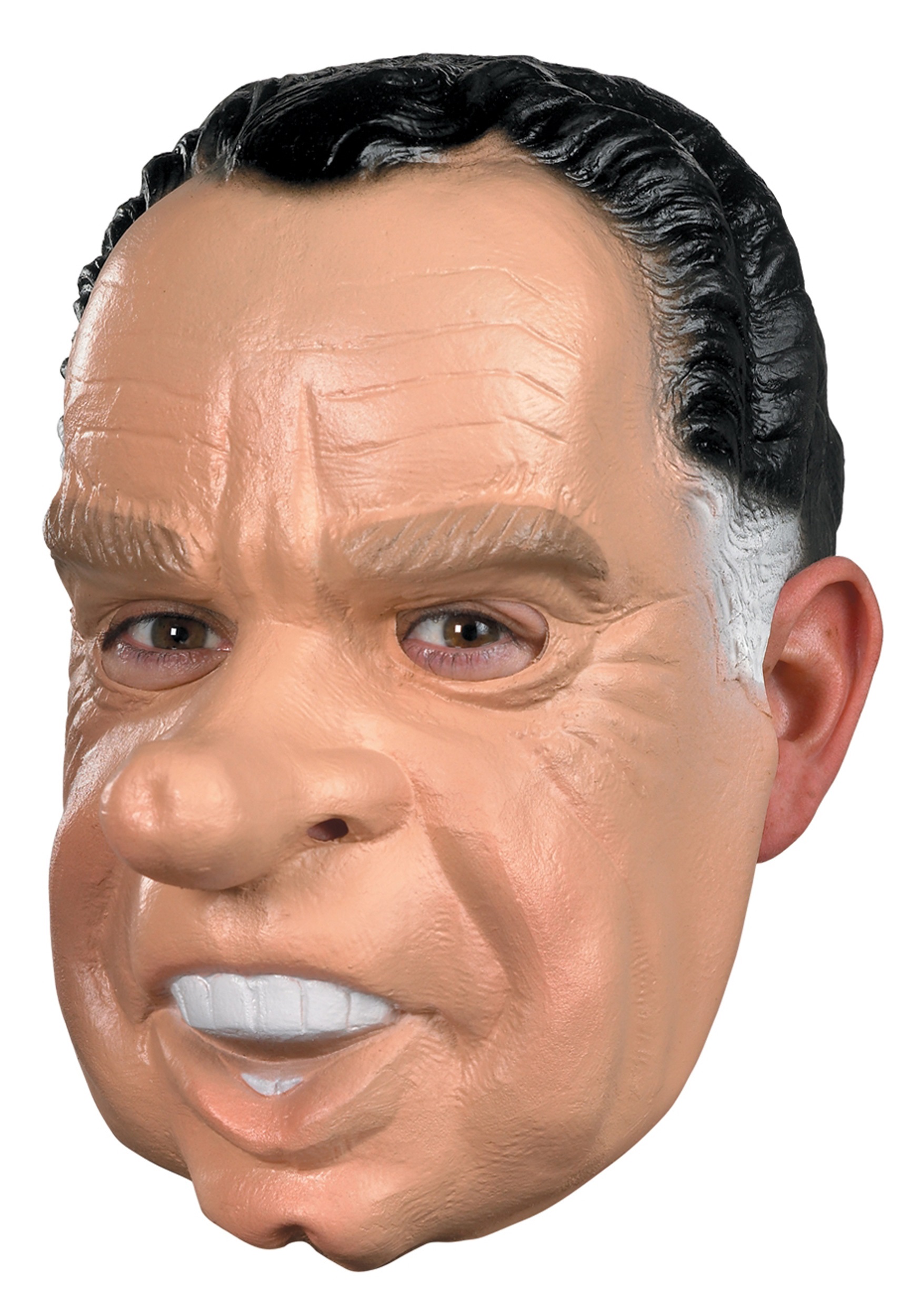
I leave you with one more thought: no other President proves as popular when it comes time to pulling bank heists and Halloween trick-or-treating:
Next Up: The Unappreciated One

Read more ...

Tuesday, October 22, 2013

Presidential Character: Week Thirty-Six, The Salesman Who Couldn't Convince Himself

mintu | 7:32 AM | | | | | | | Be the first to comment!
There may never have been a better horse-trader in politics than Lyndon B. Johnson.

Politics itself, when done right, is all about deals.  Deals between parties, deals between pols, deals to get one pork barrel program in exchange for a key vote on a policy treaty.  Like it or not, there's a Quid Pro Quo nature to American governance, as long as the quids are as legal as the quos.  And as long as the deals happen, the government functions (SEE The Long October and the modern GOP obstructionism for how government collapses without compromises).

Johnson was a master at deal-making.  Stories abound about how he would work out a fellow congressman's position, figure out a proper arrangement to get his vote, and do the deal.  For the ones he couldn't convince, he'd find a way to get those elected officials out of town on "fact-finding missions" before he changed a vote's schedule to take advantage of the absence.  And for the ones he couldn't convince and yet needed to get a vote from, he would apply The Treatment, a form of psychological warfare under which friends and enemies alike would wilt:

...(It was) supplication, accusation, cajolery, exuberance, scorn, tears, complaint, the hint of threat. It was all these together. It ran the gamut of human emotions. Its velocity was breathtaking, and it was all in one direction. Interjections from the target were rare. Johnson anticipated them before they could be spoken. He moved in close, his face a scant millimeter from his target, his eyes widening and narrowing, his eyebrows rising and falling. From his pockets poured clippings, memos, statistics. Mimicry, humor, and the genius of analogy made The Treatment an almost hypnotic experience and rendered the target stunned and helpless... (Robert Dallek, PBS.org link)

The most famous moment of Johnson's method was when he met Alabama Governor George Wallace, an at-the-time fervent segregationist whose state was Ground Zero of the Civil Rights movement in 1965.  The brutal assault on protesters at Selma had just happened and LBJ wanted to send in federal troops to secure the peace (from that Brian Sweany's Texas Monthly article):

...the President directed Wallace to a soft couch. Nearly a foot shorter than Johnson, he promptly sank into its cushions. The president pulled up a rocking chair and leaned in close. The Johnson Treatment had begun...
Over the next three hours, LBJ pressed Wallace on the issue of race. Careful not to let the governor play the martyr for states' rights, he cajoled and flattered him. When the president asked him why he wouldn't integrate the schools and let black residents register to vote, Wallace said that he didn't have the power. Johnson thundered in response, "George, don't you shit me as to who runs Alabama." In the end Johnson questioned Wallace's place in history: "George, you and I shouldn't be thinking about 1965; we should be thinking about 1985... Now, you got a lot of poor people down there in Alabama... a lot of people who need jobs, a lot of people who need a future. You could do a lot for them. Now, in 1985, George, what do you want left behind? Do you want a great big marble monument that says 'George Wallace: He Built'? Or do you want a little piece of scrawny pine lying there along that harsh caliche soil that says 'George Wallace: He Hated'?"...
Shortly after the meeting, Wallace agreed to ask the president to send in federal troops. The governor, who just two years before had declared, "Segregation now, segregation tomorrow, segregation forever," would later say, "Hell, if I'd stayed in there much longer, he'd have had me coming out for civil rights." 

Within two days, Johnson would push for his signature 1965 Voting Rights Act that alongside the 1964 Civil Rights Act killed off Jim Crow Era in Southern (and national) politics.  Achievements not even the active civil rights Presidents like Truman, FDR, Teddy Roosevelt, or Grant could claim.

Johnson was obsessed with the idea of being the best: achievement above all others gnawed at him.  He chafed as Vice President under Kennedy, and when Kennedy was assassinated Johnson used the moment - and borrowed the legacy - to take over the Presidency on his terms and pass historic legislation on civil rights and voting rights that JFK never could.

And yet... and yet.  For all his efforts, for all his successes, he didn't last very long as President, and left the office hated more than loved or feared.  All because of one thing:

Lyndon B. Johnson could never really sell the idea of Lyndon B. Johnson as President to the people... and never could sell it to himself.

Oh, he could still make deals from the White House same as he could from the Senate backrooms.  He could cajole and brow-beat the Beltway media to his whim.  But there was something lacking.  All that ambition to get things done and yet almost no ability to dial back that intensity, no ability to inspire like Kennedy or FDR, no humility or ability to take the body blows of losing fights the way Active-Positive Presidents could.

At heart, Johnson was an Active-Negative, compelled to do things because "I Must" (much like Hoover before him) drove his deal-makings rather than "I Can" that could have allowed for compromise and adaptability.  As Professor Barber notes in his book Presidential Character, Johnson was obsessed with it being about him and what he had to do:

Lyndon Johnson took his tragedy personally.  His initial commitment to the war was made in personal terms: "I am not going to lose Vietnam.  I am not going to be the President who saw Southeast Asia go the way China went"... Not only did he talk that way, but he invested his energies as intensely as his words.  He had always been a fantastically active politician, driving himself well beyond what those around him could do... (p.42-3)

Like A-Ns before him, Johnson's Driven character could not allow him to see the objections of his opponents, which he came to view quickly as enemies:

...He had an answer to that question (of why bad things kept happening to his tenure): his miseries came from "knee-jerk liberals," "crackpots," and "trouble-makers"... the prime villain... became Robert F. Kennedy, the rival he had always called "Sonny Boy"... Even at the height of his success... Johnson complained bitterly asking "What do they want?  What do they really want?  I am giving them boom times and more good legislation than anybody else did, and what do they do - attack and sneer!  Could FDR do better? Could anybody do better? What do they want?" (p.44-6)  

And when confronted with enemies, the A-N's response to is to be Uncompromising, even in the face of facts:

In the course of his crusade, Johnson slowly whittled his advisors down to those ready to back his course.  George Ball had opposed the war from the early days, but Johnson had managed to plug him so firmly into the role of official dissenter that his views were listened to and then easily dismissed.  One by one his aides resigned... (p.45)

This self-inflicted damage was nowhere more apparent than LBJ's harshest failure: managing the Vietnam War.  What had been a small sideshow in the Cold War in 1963 - where Kennedy was hedging his bets between commitment and withdrawal - Johnson turned into a hotspot as he saw it as another domino in the Communist Takeover of Asia.  Maneuvering legislation and military backing for South Vietnam to create a favorable situation, Johnson took the Gulf of Tonkin incident as an excuse to deploy fully committed troops to defend the South against the North Viet Cong.

Johnson's main objective in committing to a war effort was to force the North Vietnamese to the negotiation table.  After all, deal-making was exactly LBJ's forte.  Problem was, the Viet Cong were not interested in any deals: the U.S. misread Vietnam as a Communist takeover when it was more a nationalistic effort to unify Vietnam into one.  The North Vietnamese quickly realized one thing: Johnson was not committed to open war, just holding patterns and bullying tactics.  And that they didn't have to beat the U.S. army on the battlelines: they had to beat Johnson.

Johnson's nature as a salesman betrayed him the longer the Vietnam effort strayed.  What was supposed to have been a quick mission turned into a quagmire.  Johnson obsessed over winning battles, which meant winning the body count statistics, which meant an overemphasis on numbers rather than qualitative results.  Above all, nothing was happening to get the other side to a negotiating table, and it drove Johnson to escalate.  Each troop draw-up exposed more of the lies his administration were claiming about "winning the war."  By 1968 he was losing home support, and the nation became more divided between pro-War and anti-War factions.

When the Tet Offensive - a massive blitz by the VC and their guerrilla forces throughout South Vietnam - occurred in late January 1968, it ruined Johnson's Presidency.  While in real terms the North Vietnamese lost far too much manpower to the attacks, it exposed Johnson as a liar about the "war ending any day now."  By March of 1968 Johnson pulled back on his war effort - and announced he would not seek a second term (the 25th Amendment did not apply to his brief tenure finishing JFK's) - as a show of faith to bring North Vietnam to the table at last.

That proved to be one of the nation's worst years: violent and tumultuous and unhappy.  It left a massive stain on LBJ's legacy, one that would have been remembered for its striking civil rights victories instead of the bloodshed at home and abroad.

And it left us with an Active-Negative more driven and self-destructive than LBJ ever was.

Next Up: I quoted from Lord Jim when this one died... and yes, after all he was one of us...
Read more ...

Sunday, October 13, 2013

Presidential Character: Week Thirty-Five, The Reflective Chrome Mask of the New Frontier

mintu | 2:12 PM | | | | | | | Be the first to comment!
They sat on the stony ground/
And he took out a cigarette out/
And everyone else came down/
To listen./
He said "In winter 1963/
It felt like the world would freeze/
With John F. Kennedy/
And The Beatles..." - "Life In a Northern Town" Dream Academy

Let us sit upon the ground and tell sad stories of the death of kings. - William Shakespeare

I grew up in the shade of the John F. Kennedy administration.

Oh, I was born in 1970 but by the time I was in school and learning history JFK had been inserted into the textbooks, which makes it ancient history to me.  But it was still recent enough, much like the Eisenhower years, that I personally knew people - hi Dad, hi Mom! - who were living in that era and coping with the moments as they happened then.

And as I grew up, talking about history at the dinner table or watching the TV shows and the movies and the anniversary specials about Nov. 22nd, it got to be pretty clear that Dad was not a huge fan of JFK.  When I got older to be braver about asking Dad's opinions on JFK I did, and Dad gave a few points on Kennedy's dissembling and dishonesty which to be fair fit a good amount of the textbook materials I'd read to that point.

What did surprise me was when I got to University of Florida and ran into a college history professor who shared the same disdain for Kennedy.  Having gone in with the stereotypical view of professors as liberals, and informed by my Old School Republican Dad of how liberal JFK was, I was just a tad shocked.  And I found myself raising a hand and interjecting that while Kennedy's administrative goals were not as grandly achieved as the hagiographers would make it, I argued that Kennedy was an effective President as someone who inspired action in others, a form of leadership through oratory and forward thinking.

This was about the time I learned of James David Barber's Presidential Character textbook - it might have been the same class - but it was awhile before I read up on Barber's review of Kennedy's tenure to see if I could be right about Kennedy's inspirational qualities.

Was Kennedy a liberal, a conservative, or what?  His energy was apparent, its direction obscure.  He seemed detached, cool, reluctant to commit himself ideologically... Kennedy's priorities - the causes he would be willing to go to the wall for - were unclear... (p.342)
There was not a great deal of talk about "style" in politics before the Kennedys.  The campaign had an elan, a dash and flair... People saw in him what they wanted to: the Irish lad made good, the crisp Harvard mind, the battle-scarred veteran, the scion of unfathomable wealth, the handsome humble fellow destined for mysterious greatness.  Whatever it was, it added up to charisma... For all his apparent modesty - perhaps in part because of that - Jack left people feeling they could do better and enjoy it.  Even then, Kennedy and the Kennedys went around enspiriting people, calling forth their hope... (p.357)

Kennedy as the Inspiration figure: he had crafted for himself a mask of sorts upon which other people's beliefs could find reflection.  The mask itself projected the image of Kennedy being motivated towards accomplishments - fixing the economy, fighting the Russians over Berlin and Cuba, working on civil rights, pushing a space race program to reach the Moon by the end of the decade "not because these things were easy but because they are hard."  To that persona, Barber determined JFK to be an Active-Positive character, considering above all the Adaptive trait that such a veiled identity allowed Kennedy more flexibility in his decisions.

But that mask was also infuriating for people who had to deal with Kennedy, and for both his allies who expected so much more and his enemies who felt his youthful inexperience and weakened Presidential mandate: He barely won a close race against Richard Nixon in 1960, and was balanced by a Congress that was more conservative and demanding than an A-P President would like.

For all the efforts of presenting himself as an ardent defender of the growing Civil Rights movement under Martin Luther King, Kennedy moved about as fast as Eisenhower did during the first few years of his tenure: it wasn't until the lid blew off the cauldron with Birmingham in 1963 that Kennedy got more out in front on the issue.  For all his being a Cold Warrior fighting the Soviets, the Far Right types pushing for a hot war - especially JFK's own Joint Chiefs of the military - were frustrated that Kennedy wouldn't invade Cuba outright nor stop the Soviets from building the Berlin Wall.  And for all of Kennedy's inheritance of the New Deal from FDR and Truman, Kennedy's economic platform seemed more pro-business than even Ike's tenure.

What seemed - still seems - like ineffectiveness to observers was really Kennedy's Active-Positive traits of being Adaptive, Compromising, and less-discussed but more subtle trait of Game-Playing (read Barber's review of the Kennedy family traits that JFK grew up in, p.343 to 347 and elsewhere).  By Game-Playing I mean "being a chessmaster," someone who looked at the board, figured out how the pieces moved, better still figured out why those pieces move that way, and game out a situation (including deal-making compromises) that would lead to wins.  It's also known as "Playing the Long Game," and some of the more successful A-P Presidents are masters of it.

Where the generals wanted war, Kennedy saw the larger picture of global disaster (Mutually Assured Destruction) if the U.S. and U.S.S.R fought each other directly.  Kennedy wasn't too thrilled either to find he'd been lied to about the Bay of Pigs invasion of Cuba: the estimations of support were way off, and the organizers were really operating on the belief that once committed in part (the landing) the U.S. would commit in total (air support) if the invasion floundered.  When Kennedy didn't bite, they felt betrayed... even though they betrayed him first with unrealistic projections.

Like Truman, Kennedy was not keen on war as the ends of any engagement with our Cold War opponents.  When the Soviets began their Wall around Berlin to stop the out-flowing tide of refugees, it was another call to action for the hardliners... but Kennedy held it in check, showing action through calling up more troops to show Khrushchev he was serious, but letting the Soviets finish their wall because it ultimately kept the peace (if more people kept fleeing Eastern Europe it would well have been war).

The biggest test was of course the Cuban Missile Crisis: for all intents the closest the entire planet got to nuclear war.  The United States was still backing exile Cubans to overthrow Castro even with the fiasco of the Bay of Pigs on everyone's mind: the Soviets also weren't thrilled with a set of nuclear warheads placed within Turkey figuratively a stone's throw away from Moscow.  In response, the Soviets sent missiles into Cuba, a figurative stone's throw from Washington DC.  Literally a stone's throw away from Florida.

When the U.S. found out... when the spy plane came back with photographic proof... we entered the 13 most panicked days in American (and global) history.  The generals - Air Force General LeMay in particular - wanted to invade Cuba and hit the missile strikes with air and land assaults before they felt the missiles could be deployed (they didn't know or didn't care to know that some of the missiles were ready to go).  Taking the diplomatic route without a show of strength would have taken too long, given the Soviets and Cubans more time to obstruct and hide their efforts.

Kennedy took the third option (A-Ps usually do): he formed a naval blockade instead, daring the Soviets to cross it in such a way that the burden would be on them.  It wasn't full war, but it was hardline enough to convince Khrushchev and the rest of the Soviets that Kennedy had strength to follow through.  And even as that played across the TV sets, the White House kept communications open with the Soviets, and then jumped on an opportune moment when two different proposals had been floated to take the earlier better deal.  When the crisis ended with a public agreement that the Soviets will remove the missiles and that the U.S. would not invade Castro's Cuba (and a secret arrangement to remove those ICBMs from Turkey), everyone - except the war hawks who wanted to fight the dirty Commies - breathed a sigh of relief.

In all other matters, Kennedy kept playing the long game, stringing out decisions ranging from Vietnam - neither fully committing to efforts there, nor pulling completely out - to the Civil Rights movement.  While not as Confident as Truman had been to make the Big Decision, JFK was more content to work behind the scenes and wait for the right moments.  Even though such moments were running out for him.

As for Kennedy's assassination... well, now is not really the time to discuss it.  A more appropriate moment will be the 50th anniversary - yes it has been that long - coming up this November 22nd.  I'll talk more about it then... and discuss my arguments for one of the conspiracy theories - yes I am a conspiracy nut, I hope I am honest enough to admit to that...

The thing about Kennedy in the final analysis is that he's a mirror to us, to the nation, to our psyche.  We see of him what we want to see: the hopes or fears he generated, the weakness or strength he conveyed, the nobility or the crassness his fans admired and his haters despised.  We apply our theories and our conspiracies on him and his administration, which ended all in "What Ifs" and "Never Weres".  The best we can say is that Kennedy's New Frontier - a dazzling dream of ongoing progress into a shiny chrome future - died with him that day in Dallas: neither of Kennedy's immediate successors had the vision or the skill to pull it off the way Kennedy could (even LBJ, who tried but had his own personality flaws trip him up, but that comes later).  A practical review of the Kennedy years would be doable, but no one would notice because they'll still insist on seeing the ghosts of their beliefs.

We may not get a clear-sighted view of JFK's tenure for another 50 years.

Next Up: The Best Horse-Trading Brow-Beater You'd Ever Meet Who Could Sell You Anything... Just Not The Idea Of Him As President
Read more ...
Twitter Delicious Facebook Digg Stumbleupon Favorites More

Search

Pages

Powered by Blogger.